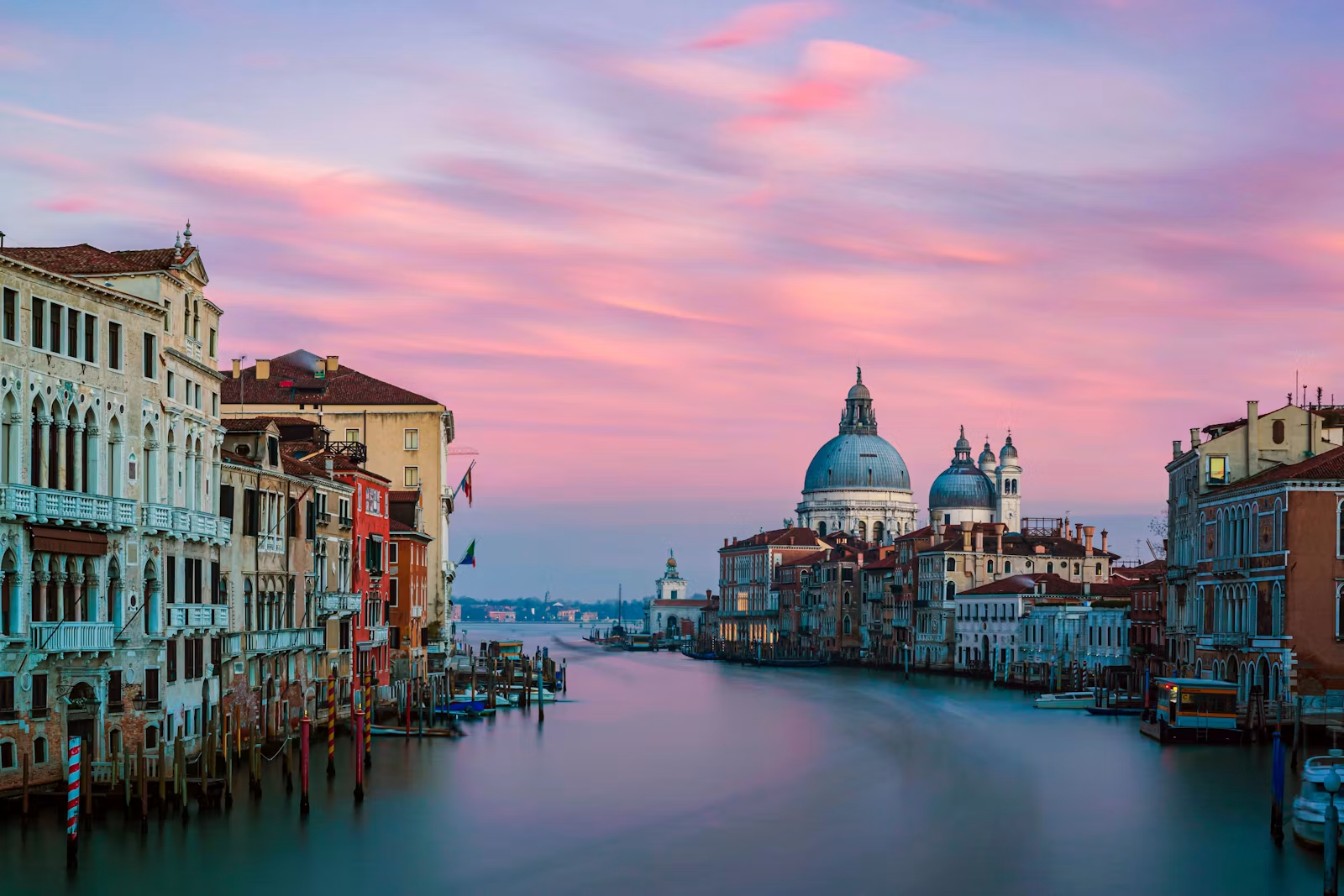
Bridges lit from below, and not one engine
The light arrives twice, once from the sky and once off the water, so the undersides of bridges glow and nothing casts a proper shadow. Past the end of the road bridge there are no cars at all, so the loudest thing in a side street is a hand-cart bumping down a flight of bridge steps. Venetians walk fast with somewhere to be, the only defence against being asked the way to St Mark's forty times before lunch.
€90 for half an hour, €7 for the violins
The city sets the gondola tariff by decree: €90 for 30 minutes between 09:00 and 19:00, €110 for 35 minutes from 19:00 to 04:00, up to five people aboard. Split five ways that is €18 each. Alone, it is €90 for half an hour of nose-to-tail traffic in the back canals, and I'd sooner buy a day pass and stand at a vaporetto's front window. Stands at the Molo.
Caffè Florian prints it all on its own menu: €7 an espresso, €17 a spritz, and €7 a head for the music, added to the first order when the orchestra plays and waived for under-10s. The band is live and the room is glorious. I still take my coffee standing at a bar two bridges away.
Two euros, standing up, at the Santa Sofia stazio
The traghetto da parada is a working gondola that crosses the Grand Canal and does nothing else. The fare is set by the city: €2.00, or €0.70 for residents and IMOB holders, in coins into the oarsman's hand as you step aboard. I use Santa Sofia, 08:30–19:00 on weekdays and 09:00–18:00 at weekends and holidays, because it lands beside the Rialto fish market and that is the reason to go early. San Tomà keeps the same weekday hours; Carbon runs 09:00–12:00, Monday to Friday. Locals stand for the crossing.
Nowhere to sit, and that is written down
The city's urban policing regulation bans sitting or lying on bridges, steps, wellheads, monuments, the fondamente and the raised acqua alta walkways, and bans eating or drinking sitting on the ground. That is €100 to €200 and an order to move on. Feeding pigeons or gulls costs €25 to €500, a bare chest or swimwear in public €250, a bicycle even pushed by hand €100. Eat your sandwich standing up.
St Mark's, and the custodian's cat
St Mark's Campanile. One morning in 1902 the bell tower collapsed into the square, and the only casualty was the custodian's cat. Venice rebuilt it "where it was, how it was".
St Mark's Basilica. The four bronze horses were looted from Constantinople in 1204; Napoleon took them to Paris and they came back. Those on the balcony are replicas.
Doge's Palace and the Bridge of Sighs. Byron popularised the romantic name, but the bridge linked the palace to the prisons, so the sighs were the prisoners'. Casanova was locked under the lead roof in 1755 and escaped through it.
Rialto Bridge. Its wooden predecessor collapsed under a crowd watching a wedding, worth remembering when you're wedged mid-span. The stone bridge was finished in 1591 by an architect named, perfectly, Antonio da Ponte.
The Ghetto. Set up by decree in 1516. The word "ghetto" probably comes from the foundries that stood here before.
La Fenice. The name means "the phoenix", earned by burning more than once, last in 1996, when two electricians set the fire.
Murano. In 1291 Venice moved its glass furnaces here as a fire hazard. Glassmakers who left without permission risked death, one way to keep a trade secret.
Cicchetti on your feet at Do Mori
Cicchetti are Venice's bar snacks: small bites on bread, eaten standing with a glass of wine in bars called bacari, where nobody minds 11 a.m.
Sarde in saor is fried sardines layered with onions, vinegar, raisins and pine nuts, a sailors' way of keeping fish, in a 14th-century Venetian cookbook. Order one thing, I'd make it this.
Baccalà mantecato is dried cod whipped to a cream on bread or polenta. Italy's stockfish trade traces to Pietro Querini, a Venetian merchant shipwrecked on the Lofoten Islands in 1432.
Fegato alla veneziana, calf's liver with slow-cooked onions, and spaghetti al nero di seppia, black with cuttlefish ink, finish the list. Check your teeth after.
My route starts at Cantina Do Mori, San Polo 429, by the Rialto market, often called the oldest bacaro in town. Then Dorsoduro, for Cantine del Vino già Schiavi on Fondamenta Nani: cicchetti made daily, over 500 wines, closed Sundays.
Salute candles, Redentore fireworks
On 21 November Venetians cross a bridge of boats over the Grand Canal to the Salute basilica, built to thank the Virgin for ending the plague of 1630, and light a candle for a healthy year.
The Festa del Redentore marks an earlier plague, in 1577, with a votive bridge to the Giudecca and fireworks over St Mark's Basin at 23:30 on Saturday. It falls on the third weekend of July, so 17–18 July 2027. I'd book parking early.
The Regata Storica is on the first Sunday of September, so 5 September 2027: historic boats for Caterina Cornaro, Queen of Cyprus, welcomed in 1489, then the races. Carnival 2027 ends on Shrove Tuesday, 9 February; the programme is still to come.
What's on
| When | What |
|---|---|
| Until 22 Nov 2026 | Biennale Arte 2026, 'In Minor Keys', at the Giardini and Arsenale (closed Mondays) |
| 21 Nov 2026 | Festa della Madonna della Salute: a votive bridge of boats across the Grand Canal |
| Until 9 Feb 2027 (Shrove Tuesday) | Carnevale di Venezia 2027. Full programme not yet published at the time of writing |
| Expected 17–18 Jul 2027 (always the third weekend of July) | Festa del Redentore: fireworks over St Mark's Basin on Saturday night, votive bridge to the Giudecca |
| Expected 5 Sep 2027 (always the first Sunday of September) | Regata Storica: historic boat parade and races on the Grand Canal |