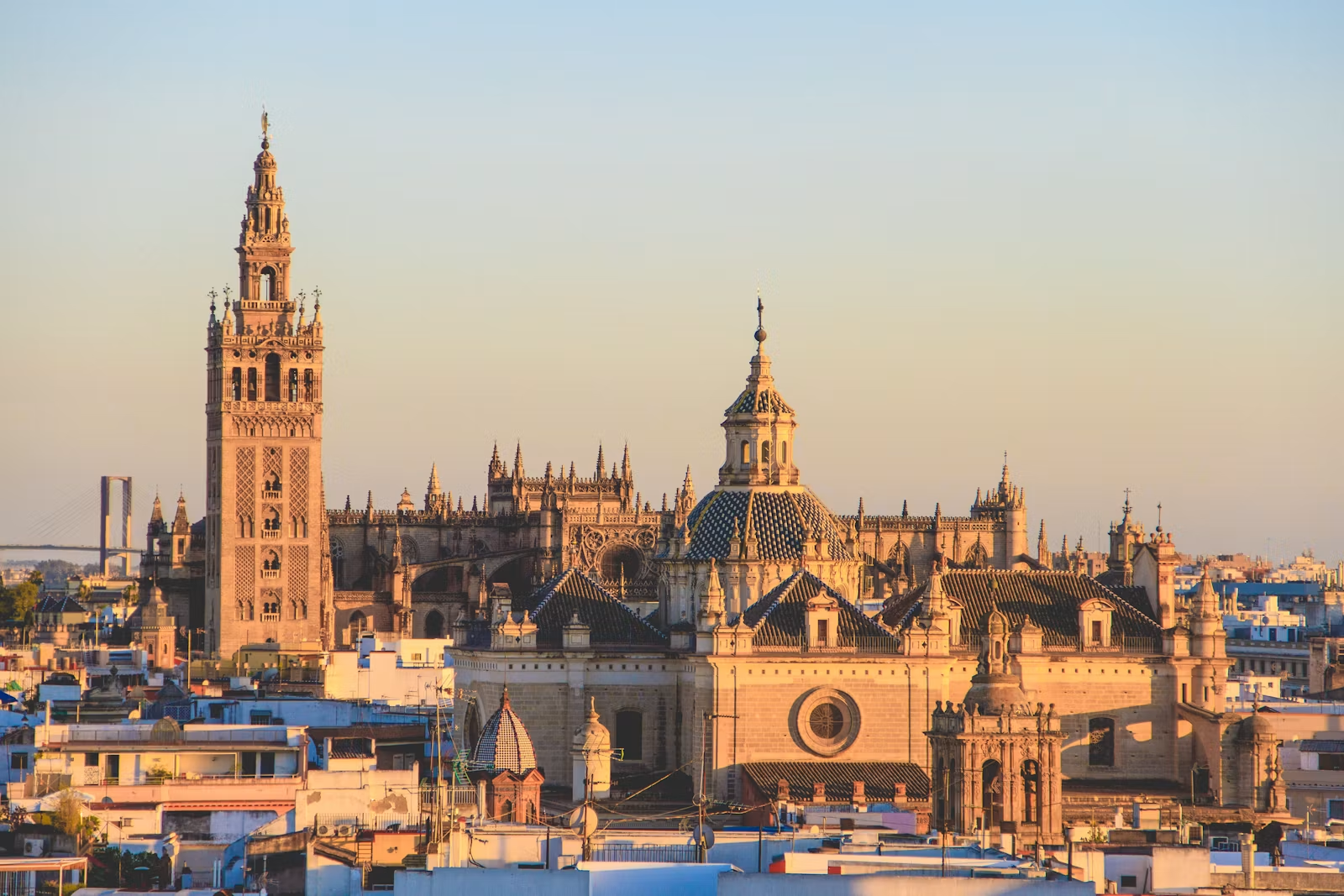
The heat is a schedule, not a complaint
Seville smells of orange blossom in March and hot stone from June onward, and organises its day around the second fact rather than fighting it. Shutters close at two and the streets empty as if something had been announced. At nine the same streets fill with entire families, grandmothers included, and stay full until one.
€38 for a folding chair, and a bus that cannot reach the good streets
Tablao Flamenco Los Gallos is the tablao every hotel desk pushes: €38 an adult, €20 a child, 75 minutes, one drink. The dancing is real and the performers professional. The arithmetic is what I object to — €30 an hour a head, a family of four at €116 before dinner. Those four could do the Alcázar, the cathedral, the Setas and the bullring for less.
The hop-on-hop-off bus I cannot price: the operator quotes it in dollars, not euros. Check before paying. The fare is not the argument: the old centre is small and mostly pedestrian, the Setas to the Torre del Oro is a twenty-five-minute walk, and the bus cannot enter the streets you came for.
El Jueves, and be gone by eleven
Every Thursday, 08:00 to 15:00, free: El Jueves takes over Calle Feria in the Macarena, north of the Setas. Trestle tables of old tiles, brass, tools, books, records and a lot of ordinary junk, run by and for the people who live on that street.
Go before eleven: by noon in summer the street is in full sun and the better stalls are packing. Cash, small notes. What I carry home is the loose hand-painted azulejos, a few euros each. The covered Mercado de la Calle Feria on the same street has bars where a beer and fried fish at eleven in the morning is normal Thursday behaviour. Do not drive to any of it — leave the car at Cartuja and walk over the Puente de la Barqueta.
In August the meters clock off at two
Seville's blue zone normally runs Monday to Friday 09:00–14:00 and 17:00–20:00, plus Saturday morning. In July and August the afternoon shift and Saturdays are dropped entirely — enforcement is Monday to Friday, 09:00 to 14:00, and nothing else.
So a space found at two in the afternoon in August is free until nine the next morning, and a car left from Friday lunchtime costs nothing until Monday. Visitors get this wrong both ways: some pay for an afternoon they did not owe, others assume four o'clock means free forever and collect a ticket at half past nine. Every parquímetro prints its own timetable — read the summer line.
The free one with no queue is twenty metres from the long one
The Real Alcázar is €15.50, booked online — the walk-up queue is what people remember about their Seville morning. Add the Cuarto Real Alto, a separate €5.50 on a timed slot with a small daily quota: the upper royal apartments, still in use.
The Catedral and Giralda is €13 online, free on Sundays 16:30–18:00 but only with a prior reservation. People turn up at 16:25 expecting a freebie and pay full price.
The Archivo General de Indias stands between the two, holds the paper record of Spain's American empire, is free, and almost never has a queue while two hundred people stand in the sun twenty metres away. The one I push hardest.
The Setas de Sevilla is €10 for the walkway and open past midnight in summer: the only serious viewpoint you can do after dinner.
Plaza de España is free, but summer concerts close the square and the park — check the calendar. The Plaza de Toros de la Real Maestranza is €12 and shuts at 15:00 on fight days. Casa de Pilatos is €10 downstairs, €5 more upstairs, which is still the family's home and therefore guided.
Order the spinach, and the thick cold soup
Espinacas con garbanzos — spinach cooked down with chickpeas, cumin, garlic and a little vinegar — is Lenten food that became everyday food, and the most Sevillian thing on any tapas list. Vegan in most bars, which visitors rarely realise. I eat it at El Rinconcillo, founded 1670 and by its own account the oldest bar in the city; the tab is still chalked on the counter in front of you.
Salmorejo, not gazpacho: thicker, tomato and bread and oil and garlic only, topped with jamón and egg. Pescaíto frito is small fish floured and fried, usually cazón en adobo: dogfish marinated in vinegar, garlic and oregano first. Eat it the second it lands. Tortillitas de camarones — lace-thin fritters of chickpea flour and whole tiny shrimp — are on every good fried-fish menu here.
The montadito de pringá is the cheap one: a hot roll filled with the meat mashed out of a cocido. Bodeguita Romero publishes its hours — 09:00–17:00 and 20:00–24:00 weekdays, closed Sunday afternoons and all Monday. That 20:00 reopening is the real Seville dinner hour; at seven you eat alone. For a glass in a room that has not changed, Casa Morales, founded 1850.
Two weeks when the centre belongs to somebody else
Semana Santa runs from Palm Sunday, 21 March, to Easter Sunday, 28 March 2027. Processions occupy the streets between the parish churches and the cathedral for hours, and crossing the route on foot is sometimes impossible. The brotherhood council had not published its 2027 timetable when I checked.
The Feria de Abril follows, customarily a fortnight after Easter. The city fixes the dates each year and had not announced 2027 at the time of writing, so do not book around a guess.
Noches de la Maestranza fills the bullring with concerts in September, and on those nights it closes to sightseers — check the official page that morning.
What's on
| When | What |
|---|---|
| 21–28 March 2027 | Semana Santa, Palm Sunday to Easter Sunday. The official brotherhood council had not published its 2027 procession timetable when we checked, so confirm routes before you travel |
| Usually about two weeks after Easter; 2027 dates not yet published | Feria de Abril. The city fixes the dates each year and had not announced 2027 at the time of writing — check before booking anything around it |
| September, dates announced each season | Noches de la Maestranza, concerts in the bullring. The ring closes to sightseers on concert days — the 2026 season confirmed 18 September as one such day |