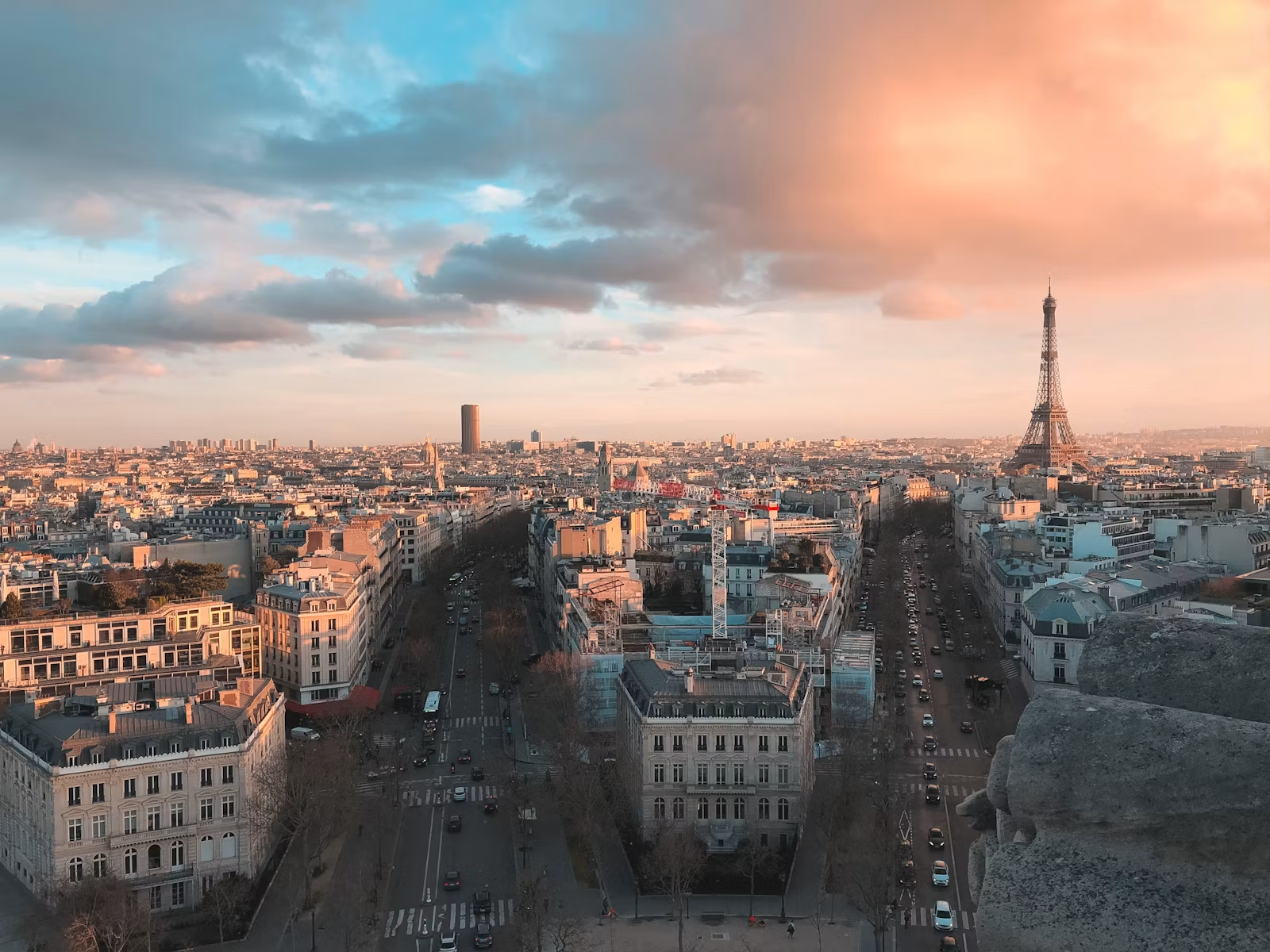
Six floors of cream stone, and café chairs facing the street
The light sits low and flat most of the year, and the limestone takes it: six floors, iron balconies on the second and the fifth, street after street. A café terrace is a grandstand: the chairs face the pavement, not each other. Parisians walk fast and leave strangers alone, which visitors mistake for rudeness.
€48 for the first floor, 124 easels for one square
Madame Brasserie, on the tower's first floor, starts at €48 a head at lunch and €90 at dinner, drinks on top. The tower's own site says what that buys: no visit ticket, only the ride up, which at lunch is the €9.10 first-floor lift. The summit by lift is €36.70. I'd go to the top and eat later.
Place du Tertre runs on a city permit, and the paperwork gives away the day: 124 pitches, 45 for portraitists, each 1.40 m by 1.20 m, worked in turns by two licensed artists. Put that on one small square in August and the portrait gets drawn in a scrum, at a price you settle inside it. The square is the problem, not the artists; I walk people down the hill.
Aligre, where the hall reopens at four
Two markets share place d'Aligre in the 12th, on different clocks. The open stalls on the place and rue d'Aligre, fruit and veg plus a brocante, trade every day but Monday from 07:30, clearing at 13:30 on weekdays, 14:30 at weekends.
The covered hall behind them, Marché Beauvau, runs Tuesday to Friday 08:00–13:00 and 16:00–19:30, Saturday 08:00–19:30, Sunday 08:00–13:30, shut Monday. That four o'clock reopening is the quiet hour and the one I use: cheese, a real butcher's counter, an Italian stall. Small notes for the outside stalls.
Comptoir, salle, terrasse: three prices, one coffee
A French café must post its prices in the street, and the small print repays two minutes. The arrêté of 27 March 1987 sets the list: black coffee, a half of draught beer, bottled beer, fruit juice, soda, mineral water, aniseed apéritif, plat du jour, sandwich, each with the volume served and the price with service, in letters at least 1.5 cm high.
One price per line is allowed only when the price is the same all over the house. A board with three columns, comptoir, salle and terrasse, is telling you the tiers differ, and the counter is the cheap one. I drink mine standing.
From Point zéro to the 18:30 flame
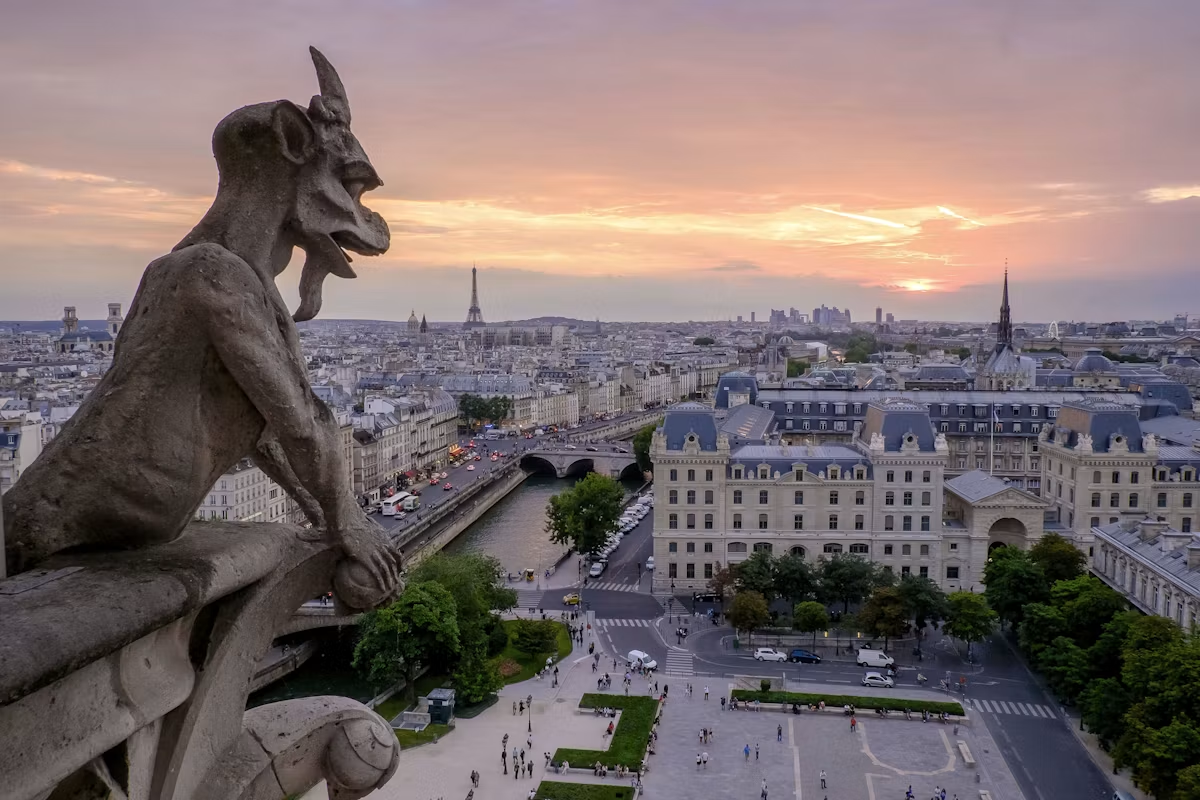
Notre-Dame. Before the door, look down. The brass Point zéro, the medallion French distances are measured from, went back into the paving on 1 July 2025. Most walk straight over it.
The Eiffel Tower. Each repaint takes roughly 60 tonnes of paint, brushed on by hand. For the Olympics it went back to an old yellow-brown. I like it best from across the river.
Sainte-Chapelle. Louis IX paid about half the kingdom's annual income for the Crown of Thorns, then built this chapel as its box. Go on a bright day; the glass is the point, and most is original.
The Louvre. In August 1911 the Mona Lisa vanished. The thief, Vincenzo Peruggia, had worked at the museum; caught in Florence.
Musée d'Orsay. A station built for a World's Fair. Édouard Detaille said it looked like a fine-arts palace; in 1986 it became one.
Sacré-Cœur. Its Château-Landon stone produces calcite when it rains: the dirtier the weather, the whiter the basilica. Climb it in a wet week.
Arc de Triomphe. The flame on the Tomb of the Unknown Soldier is rekindled every evening at 18:30. Time your walk.
Steak-frites, Chartier and the Élysée's baguette
Steak-frites is the default bistro order, and onion soup is what you want after a cold walk.
Paris-Brest is a choux ring of praline cream, shaped like a wheel because it was created in 1910 for the Paris–Brest–Paris bicycle race. Road history, as far as I'm concerned.
Every year the city names the best baguette, and the winner supplies the Élysée Palace. The 2026 winner is Fournil Didot, 103 rue Didot in the 14th. Buy two; one won't survive the car.
For dinner, Bouillon Chartier, 7 rue du Faubourg Montmartre, has fed people cheaply since 1896: no reservations, every day 11:30 to midnight, so come at an odd hour. For dessert, Berthillon, 29–31 rue Saint-Louis-en-l'Île, ice cream since 1954, shut Mondays and Tuesdays.
Grapes on Montmartre, cars at Porte de Versailles
On 7–11 October 2026 Montmartre holds its Fête des Vendanges for the 93rd time: there is still a vineyard on the hill, and the quarter parties round it for five days. Don't drive up.
The same month, 12–18 October, the Mondial de l'Auto fills Paris Expo at Porte de Versailles. Take the metro to the motor show; half of France is trying to park.
On 14 July 2027 Bastille Day opens with a parade on the Champs-Élysées and closes with fireworks at the Eiffel Tower; roads round both shut. Park on the 13th and walk.
What's on
| When | What |
|---|---|
| 19–20 Sep 2026 | European Heritage Days: ministries and palaces normally closed to the public open their doors |
| 7–11 Oct 2026 | Fête des Vendanges de Montmartre, 93rd edition, themed on music |
| 12–18 Oct 2026 | Mondial de l'Auto (Paris Motor Show), Paris Expo Porte de Versailles |
| Sun 4 Apr 2027 | Paris Marathon, 50th edition: expect road closures across the centre |
| Sat 5 Jun 2027 | Nuit Blanche: free all-night contemporary art across the city |
| 21 Jun 2027 | Fête de la Musique: free concerts on every other street corner |
| 14 Jul 2027 | Bastille Day: military parade on the Champs-Élysées, fireworks at the Eiffel Tower |