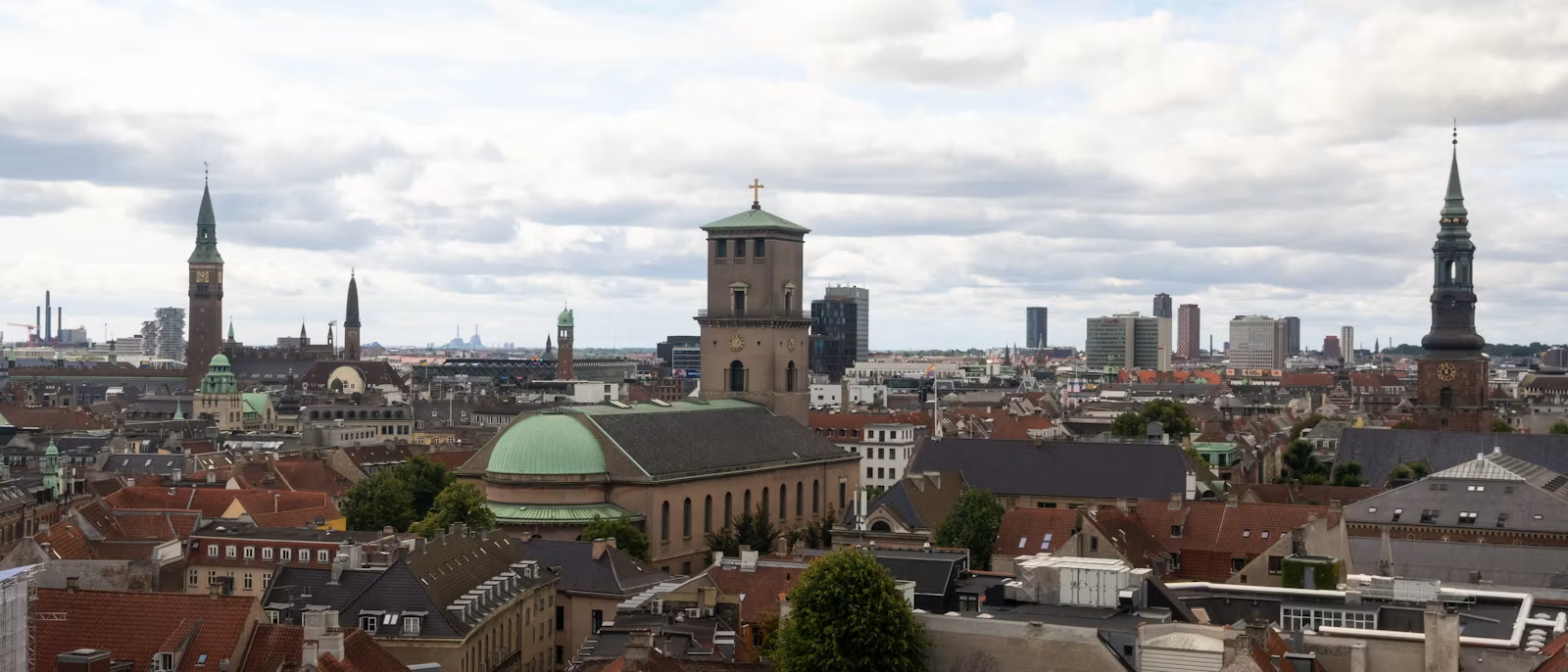
A harbour you can swim in, and wind you can lean on
The city's own reference numbers are 9.6 °C and 661 mm of rain a year, which sounds grey until you notice the harbour has been clean enough to swim in since 2002, and that people do, in October. The wind off the Øresund stops for nobody.
What I notice on the first morning is the sound: bicycles by the thousand, almost no engines. A city that quiet has decided something about cars, and the tariff is where it wrote it down.
The sunny side of Nyhavn, and the boat that costs eight times the other boat
I do not eat on the sunny side of Nyhavn. The houses are the point, and the houses are free; spend the money at Torvehallerne, open 10:00–19:00 on weekdays.
The bigger trap floats. A one-hour canal tour with the big operator starts at 199 kr; the yellow harbour buses — lines 991, 992 and 993, Nordhavn to Sydhavn past the Opera and the Little Mermaid — run on an ordinary ticket, 24 kr for two zones. The smaller operator at Holmens Kirke does an hour with commentary for 80 kr.
Oysters at half past eleven in a meat market
Kødbyens Fiskebar sits in the white-tiled meatpacking district behind the station, opens at 11:30 every day, and serves oysters all afternoon while the kitchen rests between 14:30 and 17:30. My order is whatever the board says came in that morning. Ten minutes on foot from the Tivoli Hotel garage, which is how I arrive.
The cycle lane is not a pavement, and cash is a legal right
Stand in the cycle lane for a photograph and you will be told about it, quickly and in Danish. Driving, the rule that matters is the right turn: you must not inconvenience a cyclist going straight on, and there is always one. Mirror, lane, go. Cards work everywhere, but cash is a right: staffed shops must accept it 06:00–22:00; a sign saying otherwise is a wish, not the law.
The tower a Tsar rode up, and the mermaid with a lawyer
Rundetaarn — 60 kr, and no stairs for 200 metres: a ramp winding seven and a half times round the core, which Peter the Great rode up on horseback in 1716. Then two flights of stairs, whatever the brochures say.
Rosenborg — 150 kr, 140 online, for crown jewels that still work: the sitting queen wears them, and in 2024 had the rose-cut diamonds reset as a tiara.
The Little Mermaid — beheaded twice, one arm sawn off, and under copyright until 2029: the sculptor's heirs have taken newspapers to the Supreme Court over pictures. A holiday photo is fine; a postcard business is not.
Church of Our Saviour — 70 kr, 400 steps, the last of them outside on copper, which is why it closes in rain, in wind, and for all of January.
Superkilen — free: a park built from 99 objects from 59 countries, one for each nationality on the streets around it.
The national dish was elected, and the hot-dog stand is 105 years old
Smørrebrød has an order, and Schønnemann, open since 1877, lists herring first; its own advice is two pieces for a start, three to be full, four to finish with a smile. 11:30–17:00. Stegt flæsk — crisp pork belly with parsley sauce — was elected national dish in 2014 with over 44% of 60,000 votes. The hot-dog cart has been licensed here since 18 January 1921; six opened that day, about 25 remain. The Danish pastry is wienerbrød — Viennese bakers hired during an 1850 strike, a story told everywhere and proven nowhere.
On a summer evening I go to Reffen, the street-food yard on the shipyard island, mid-March to the end of September, 11:30–20:30. The ambitious end is 31 Michelin stars across 21 restaurants in 2026. And the pH scale was invented at Carlsberg's laboratory in 1909, which I mention whenever the beer arrives.
One night the ministries open, and one Sunday the roads close
Kulturnatten, 9 October 2026, opens museums, churches and ministries until late on one pass that includes the evening's transport. Tivoli runs Halloween 2 October–1 November, then Christmas 13 November–3 January; the market on Nytorv and Gammeltorv runs 6 November–21 December.
Copenhagen Marathon, 9 May 2027 — in 2026 the whole course was closed to vehicles 06:00–17:00, with parking bans through Indre By, Nørrebro, Østerbro, Vesterbro and Frederiksberg. Distortion takes a district a day from 2 to 6 June 2027; Roskilde Festival puts 130,000 people in a field to the west from 26 June to 3 July. Take the train to that one.
What's on
| When | What |
|---|---|
| 9 October 2026 | Kulturnatten — one Friday night, hundreds of museums, churches and ministries open late on a single pass that also covers public transport for the evening |
| 2 October – 1 November 2026 | Tivoli's Halloween season — pumpkins by the thousand and the gardens open on a day-by-day price calendar |
| 6 November – 21 December 2026 | The Christmas market on Nytorv and Gammeltorv, on Strøget — 11:00 to 19:00, later Thursday to Saturday, Sunday from noon |
| 13 November 2026 – 3 January 2027 | Tivoli's Christmas season, then Easter from 19 March and the 2027 summer season from 30 March to 26 September |
| 9 May 2027 | Copenhagen Marathon from 09:30 — in 2026 the whole course was closed to traffic 06:00 to 17:00, with parking bans through Indre By, Nørrebro, Østerbro, Vesterbro and Frederiksberg. Move the car the night before |
| 2–6 June 2027 | Distortion — the street party moves through Nørrebro and Vesterbro one district a day; the streets it takes are not yours that day |
| 26 June – 3 July 2027 | Roskilde Festival, 130,000 people in a field half an hour west — the trains from the central station are the sensible way there |
| 20–29 August 2027 | Copenhagen Cooking, the food festival — in 2026 its festival square was Kødbyen, the old meatpacking district |