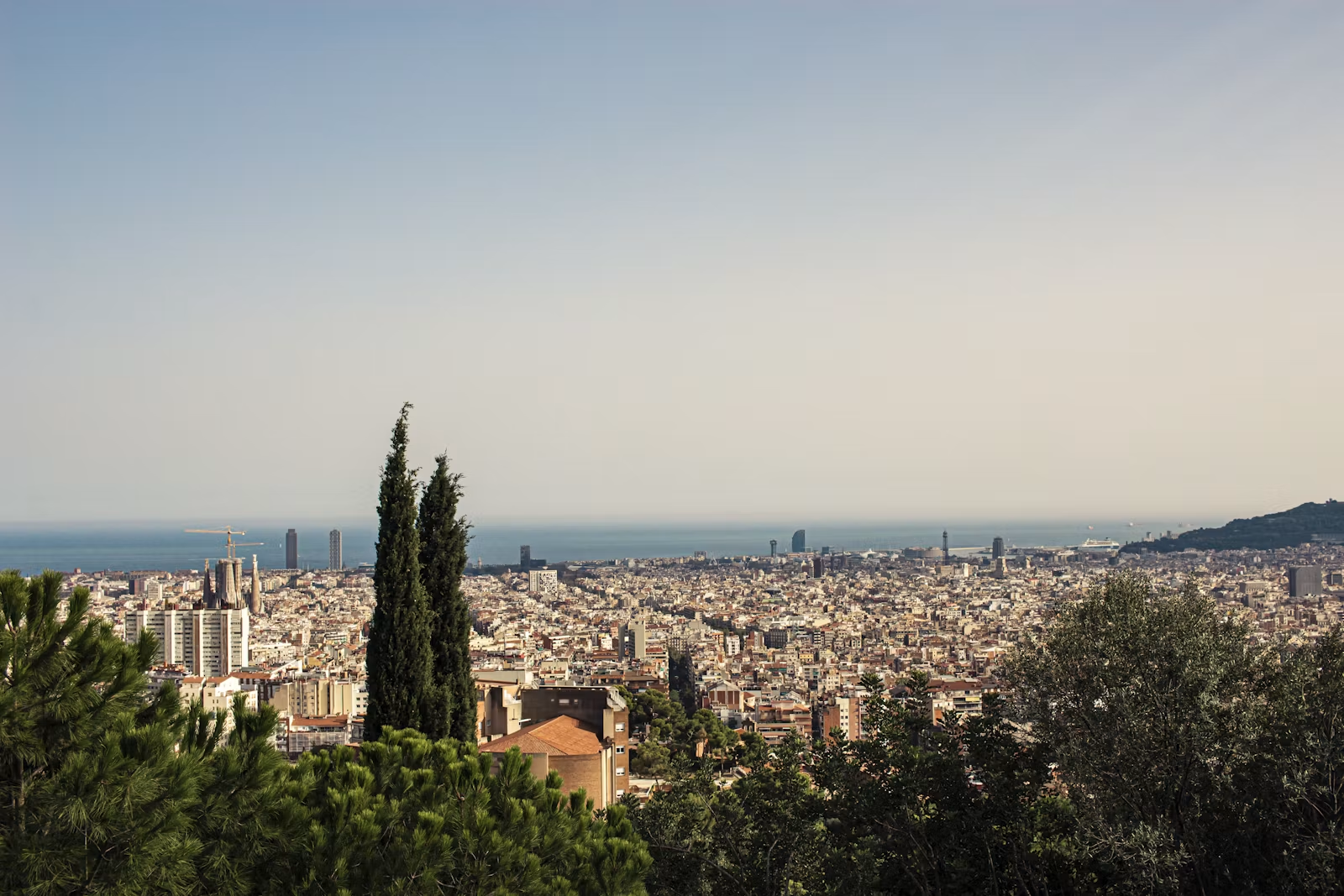
Chamfered corners, sea air, and a shrug
Barcelona is a grid with the corners cut off, and every chamfer funnels air up from the port. In August it arrives warm and smells of fried potato, sun cream and bins waiting for the six o'clock truck. The people serving you are friendly and completely unimpressed: this city has had the Olympics, a property boom and forty million visitors, and your rental car is not news.
The open-top bus and the Rambla terraces
The Barcelona Bus Turístic. €33 at the stop, €29.70 online, two hours a loop, on the streets your car just crawled along. A metro single is €2.90, a T-casual is ten rides for €13 (fares from 15 January 2026). I'd put the difference into lunch.
Terraces on La Rambla. You'll know them by the laminated photo menu in six languages and the man outside asking where you're from. Walk ten minutes west into Sant Antoni and the same lunch costs less and tastes cooked.
Sunday, 9 a.m., Mercat de Sant Antoni
The food hall runs Monday to Saturday, 08:00–20:30. Come on Sunday instead: 08:30 to 14:00, second-hand books, comics, vinyl and old postcards on the pavements around the block between Comte d'Urgell, Manso, Comte Borrell and Tamarit.
Go at nine, before the sun gets on the stalls. Bring small notes: nothing is priced, so you ask, and you can walk away. The B:SM car park under the market comes in off Carrer Tamarit, and this is the one morning I'd drive into town. Finish with a coffee on Carrer del Parlament.
Your bag has a strap. Use it.
Barcelona's pickpockets are professional, patient and not interested in your face. Locals follow the rules without thinking: bag strap round your knee under the table, never on the chair back; phone in your pocket, not face-up; backpack on your front on line 3 between Catalunya and Drassanes; nothing in a back pocket. Same for the car: empty-looking boot, no cable, no coins, no jacket on the seat. Lose any of it and you spend an hour getting the police report your insurer wants.
From the dragon roof to Sant Felip Neri
Sagrada Família. Since the cross went on top of the Tower of Jesus Christ, the basilica stands at 172.5 metres, the tallest church in the world. Cross the road before you lift the phone. Up close all you get is a wall.
Park Güell. It was planned as a housing estate with about 60 plots, and only two houses were ever built. The city opened it as a park, Barcelona's most successful failed development.
Casa Batlló. The roof is shaped like a dragon's back, and the façade shows the bones and skulls of its victims. It's the Sant Jordi legend in stone and tiles.
La Pedrera. Casa Milà was finished in 1912 on Passeig de Gràcia. The nickname means "the quarry", because that's what the rippling stone front looked like. If you climb one roof in town, make it this one, for the chimneys.
Palau de la Música Catalana. Built for the Orfeó Català choir in 1908, it's the only concert hall UNESCO has listed. Go by day, since the huge stained-glass skylight exists to let daylight into the hall.
Plaça de Sant Felip Neri. On 30 January 1938 bombs fell on this quiet square while the church was sheltering children, and forty-two people died that morning. The pockmarks in the façade are shrapnel. I'd put this square ahead of any shopping street in the city.
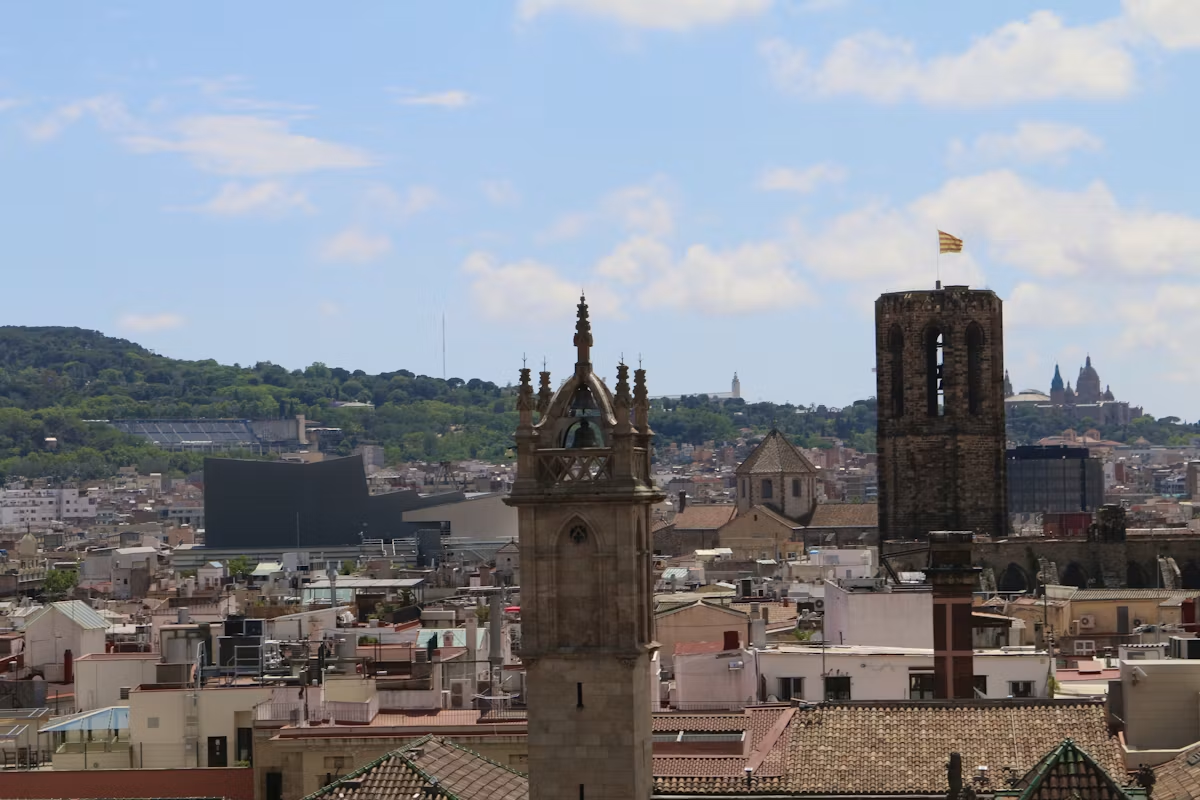
Bombas in Barceloneta, canelons since 1786
Pa amb tomàquet is bread rubbed with tomato, oil and salt. It arrives whether or not you ordered it.
The bomba is a fried ball of mashed potato filled with minced meat. La Cova Fumada, Carrer del Baluard 56 in Barceloneta, says the grandmother of today's owners invented it. It opened in 1944, takes no reservations and closes early, so go at lunch. If I had one lunch in Barcelona, it would be there.
Canelons and botifarra amb mongetes, sausage with white beans, are the Catalan home cooking at Can Culleretes, Carrer Quintana 5. It opened in 1786, which makes it Barcelona's oldest restaurant.
Crema catalana is the local crème brûlée. I wouldn't call it that out loud.
La Mercè, with Shanghai as guest city
La Mercè runs from 23 to 27 September 2026, with Shanghai as guest city. On the 24th, a local holiday, castellers build human towers in Plaça de Sant Jaume. On Saturday the 26th the correfoc sends devils with fireworks through the centre. The piromusical closes it on 27 September at 22:00, on Bogatell beach this year because of works on Montjuïc. Street events mean temporary no-parking signs, and those signs mean tows. That week I'd leave the car in a garage.
On 23 April 2027, Sant Jordi, the city fills with book and rose stalls. The book tradition started in 1926. It's also the day Casa Batlló's dragon roof makes the most sense.
On the night of 23 June, Sant Joan brings neighbourhood bonfires lit from the Flama del Canigó. Between the fireworks, people eat slices of coca, a flat sweet bread.
What's on
| When | What |
|---|---|
| 23–27 Sep 2026 | La Mercè, the city festival. Guest city: Shanghai. 24 Sep is a local holiday. Piromusical on Bogatell beach, 27 Sep, 22:00 |
| 24 Sep 2026 | Castells (human towers) in Plaça de Sant Jaume |
| 26 Sep 2026 | Correfoc: fire-run with devils and fireworks through the old town |
| 23 Apr 2027 | Sant Jordi: book and rose stalls all over the city |
| Night of 23–24 Jun 2027 | Revetlla de Sant Joan: bonfires, fireworks and coca |