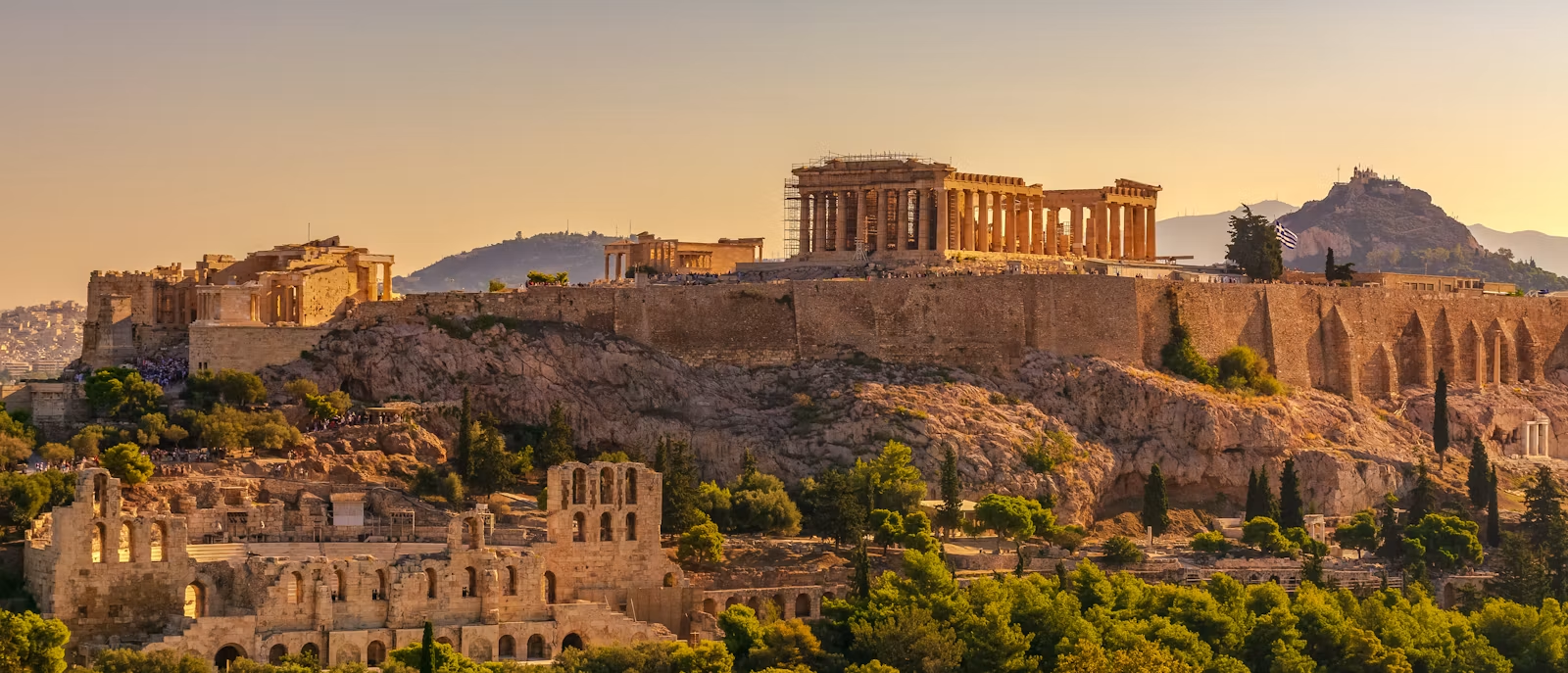
Marble glare, orange trees and double parking
Even in October the light comes off the marble hard enough to make you squint. The streets smell of grilled pork, two-stroke exhaust and, in the older districts, the bitter-orange trees along the kerb. Drivers double-park calmly; the scooter behind will find a way round.
Plaka's picture menus, and driving to the Acropolis gate
I wouldn't eat on the busiest lanes of Plaka, where the menus come laminated, with photos, in eight languages. Three streets away the food is better and cheaper.
The second trap is trying to drive to the Acropolis. There is nowhere to leave a car at the gate, and the street along the south slope belongs to walkers. Park at Syngrou-Fix and walk or ride.
A basement with no sign behind the meat market
Diporto sits under the corner of Sokratous and Theatrou, behind the central market, down a flight of stairs with no sign above it. Market workers have eaten here from dawn for generations: ten or so tables, paper tablecloths, wine from barrels, chickpeas, beans, fried sardines, salad. No reservations; you will share a table. My advice is to point at what the next table has.
Check the last digit against the date before you cross the ring
On an odd date only plates ending 1, 3, 5, 7 or 9 may drive inside the ring; on an even date, 0, 2, 4, 6 or 8. The boundary streets themselves, Syngrou and Alexandras among them, are exempt. Two 2026 news reports put the fine at €100; other Greek sites print €150 or €200, and the police notice gives no amount. I plan my weekday into town around the plate, or I leave the car at a metro garage outside.
Marble on the hill, a stadium of it below
The Acropolis — €30, booked for a one-hour entry slot on the state's hhticket.gr site. Guides disagree on whether a €15 winter price survives, so trust the price shown for your date. Take the first slot of the day.
Acropolis Museum — the Parthenon frieze at eye level, in a glass gallery facing the temple. I go here first and climb the hill with the story in my head.
Syntagma metro station — the finds from digging the metro are shown inside the station, behind glass. You will pass through anyway.
Ancient Agora — the old marketplace, and the Temple of Hephaestus above it, standing whole enough to feel like a building rather than a ruin. Quieter than the hill, and I think better.
Panathenaic Stadium — the marble stadium where the marathon finishes. Walk the track.
Filopappou Hill — free, open, and the view of the Parthenon that postcards use. Go at sunset.
Chickpeas at dawn and cod in Plaka
The dishes: revithia, chickpeas slow-cooked in the oven; fava, yellow split-pea purée with onion and oil; bakaliaros skordalia, fried salt cod with a garlic-and-potato dip.
Start at the Varvakeios market, the central meat and fish hall, and eat at Diporto round the corner. In Plaka, the city's own tourism site sends you to Bakaliarakia tou Damigou for the cod with skordalia, and that is the one plate I would cross Plaka for.
Ohi Day, the marathon, and free first Sundays
28 October 2026 is Ohi Day, a national holiday: the ring is off and the Acropolis is free, so it is packed.
The Athens Marathon runs on Sunday 8 November 2026, from the town of Marathon to the Panathenaic Stadium. A travel guide's closure list puts Mesogeion and Vasilissis Sofias on the route, with parking banned along the big avenues; check the police announcement in race week. I would not bring a car into the centre that weekend.
From November 2026 to March 2027, the first Sunday of each month is free at the Acropolis.
What's on
| When | What |
|---|---|
| 28 October 2026 | Ohi Day, a national holiday: the ring is off and entry to the Acropolis is free |
| 8 November 2026 | Athens Marathon, Marathon to the Panathenaic Stadium — route roads closed and parking banned along the big avenues |
| November 2026 – March 2027, first Sunday of each month | Free entry to the Acropolis |